Newsletter Subscribe
Enter your email address below and subscribe to our newsletter
Enter your email address below and subscribe to our newsletter

 ByJohn A
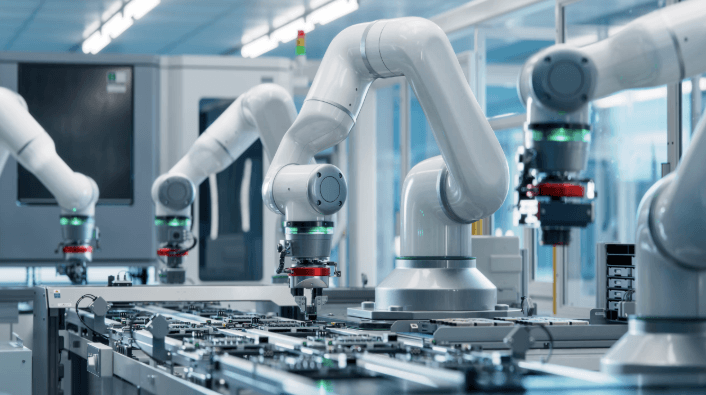
Automation is reshaping manufacturing by shifting the balance of labor, capital, and process efficiency. Robotics, AI, and data analytics enable real-time monitoring, predictive maintenance, and autonomous adjustments that improve quality and uptime. Data-driven decisions translate telemetry into action, guiding resource use and throughput while preserving operator autonomy. The result is more resilient, scalable supply chains—yet the cost, skills demand, and risk implications require careful, continuous assessment as technologies advance. This tension invites further examination.
Automation reshapes manufacturing by altering the balance of labor, capital, and process efficiency. The analysis highlights shifts in productivity, cost structure, and risk dispersion, guiding strategic investment decisions.
Automation ethics informs governance, ensuring responsible deployment and workforce transitions.
Supplier transparency emerges as a performance signal, linking procurement practices to quality, resilience, and long‑term value creation.
Robotics, AI, and data analytics converge to elevate product quality and maximize uptime by enabling real-time monitoring, predictive maintenance, and autonomous corrective action.
The approach supports robotics adoption as systems self-diagnose variances, orchestrate swift adjustments, and sustain throughput.
Data analytics translates telemetry into actionable insights, guiding proactive resource allocation and continuous improvement while preserving operator autonomy and organizational freedom.
Flexible, scalable production lines require a deliberate alignment of modular architecture, standardized interfaces, and open data flows to support rapid reconfiguration and variable throughput. The approach emphasizes disciplined engineering, cross-domain data partnerships, and repeatable validation. Flexible integration enables modular swaps without downtime, while scalable metrics track throughput, quality, and energy use, guiding continual optimization under shifting demand and global competition.
How can manufacturers align people, skills, and cost to sustain performance amid accelerating automation? Data indicates a disciplined approach: map skills to automation tasks, invest in targeted retraining, and measure impact on throughput and quality. Prioritize automation ethics and workforce empathy to maintain trust, manage transitions, and preserve morale. Strategic alignment enables resilient margins without compromising human dignity or innovation.
Automation impact shows mixed effects on job stability: some roles shift, others vanish, yet worker resilience rises through upskilling; burnout management programs correlate with sustained productivity and smoother transitions, guiding strategic labor allocations in freedom-oriented, data-driven decisions.
Hidden costs include maintenance downtime and cybersecurity protection expenses, as well as standards interoperability gaps. Data-driven strategists note these hidden costs shape investment decisions, while safety-conscious organizations pursue proactive maintenance, continuity planning, and scalable, freedom-oriented modernization.
Automation ROI can be favorable for small manufacturers when rapid payback, scalable systems, and predictable maintenance costs align with output gains; data-driven projections show feasible payback periods, enabling strategic freedom through disciplined capital deployment and risk-aware timing.
Cybersecurity on automated lines is safeguarded through stringent governance, risk assessment, predictive maintenance, and remote access security; exaggeration aside, data-driven strategies ensure resilient operations, enabling freedom-focused manufacturers to rely on robust cybersecurity governance and proactive risk management.
See also: How Cryptocurrency Can Protect Against Inflation
Interoperability standards enable cross system communication by defining common data models and interfaces. They guide integration, reduce custom adapters, and accelerate scalable automation, while allowing freedom in architecture choices and vendor selection to optimize system-level performance.
Automation redefines manufacturing by aligning labor, capital, and process efficiency around continuous improvement. A striking stat underscores the shift: plants leveraging predictive maintenance experience up to 20–30% reductions in unplanned downtime, translating into sharper throughput and lower costs. The most compelling trend is data-driven decision making—telemetry and AI translate real-time signals into actionable optimizations, enabling flexible, scalable lines while balancing skill requirements and human autonomy. In short, strategic automation elevates resilience, quality, and profitability.